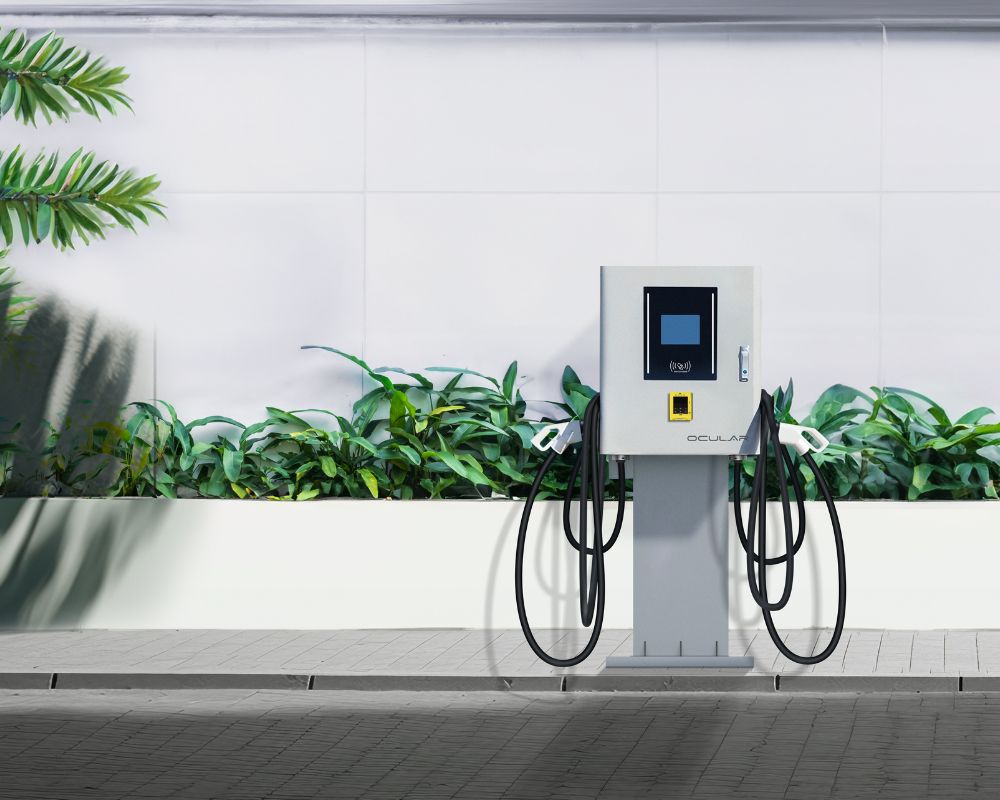
Electric vehicle charging has developed rapidly, and DC fast charging technology now makes it possible to add significant driving range in much less time than standard AC charging. EVSE provides DC charging solutions ranging from portable 20kW chargers to ultra-fast 420kW systems for workplaces, dealerships, commercial fleets and public charging locations. But how fast can a DC charger actually charge an EV, and what factors influence the charging speed?
AC Charging vs DC Fast Charging
Firstly, it’s important to understand the difference between AC and DC charging. AC charging, which is the most common type of charging available at homes and public charging stations, uses an alternating current to charge the EV’s battery. DC charging, on the other hand, uses a direct current to charge the battery, which allows for much faster charging speeds.
What Factors Affect DC Fast Charging Speed?
When it comes to DC charging, there are several factors that can affect the charging speed, including:
- The charging capacity of the EV: The maximum DC charging speed an EV can accept is set by the vehicle’s charging architecture and battery-management system. Depending on the model, maximum charging rates can range from around 30–50kW to 250–320kW or more. Connecting an EV to a higher-powered charger does not mean it will use the charger’s full output. The vehicle and charger communicate to determine an appropriate charging rate, which may also vary according to battery temperature and state of charge.
- The charging station’s power output: The power output of the charging station is another key factor that affects the charging speed. DC fast charging stations typically have power outputs ranging from 50 kW to 350 kW, and the higher the power output, the faster the charging speed.
- The state of charge of the battery: The charging speed may also vary depending on the state of charge of the battery. Generally, EVs charge faster when the battery is at a low state of charge and slower when the battery is nearly full.
- The ambient temperature: Temperature can also have an impact on the charging speed, as extreme temperatures can cause the battery to heat up or cool down, which can affect the charging speed.
DC Fast Charger Speed Comparison
The following charging times are general estimates based on charging from approximately 10% to 80%. Actual charging speed will depend on the EV’s battery size, maximum charging rate, battery temperature and charging curve.
The table below provides a general comparison of DC charger outputs, estimated 10%–80% charging times and suitable applications. Actual charging times may vary depending on the vehicle’s maximum DC charging capacity, battery size, temperature and current battery level.
| DC Charger Output |
Estimated 10%–80% Charging Time |
Suitable Applications |
| 20 kW–40 kW |
Around 60–180 minutes |
Workshops, dealerships, portable charging and vehicles parked for longer periods |
| 60 kW–90 kW |
Around 35–90 minutes |
Workplaces, retail sites, destination charging and small fleets |
| 120 kW–180 kW |
Around 20–50 minutes |
Public charging stations, commercial fleets and high-use locations |
| 240 kW–420 kW |
Around 15–35 minutes for compatible vehicles |
Motorways, charging hubs, buses, trucks and large commercial fleets |
Note: A higher charger output does not automatically mean every vehicle will charge at that speed. The vehicle’s maximum DC charging rate determines how much power it can accept.
How Long Does It Take to Charge an EV with a DC Charger?
So, how fast can a DC charger actually charge an EV? Well, it depends on the factors mentioned above. For example, a 50 kW DC fast charging station can typically charge an EV to 80% capacity in around 30-45 minutes. However, newer charging stations with higher power outputs can charge an EV much faster.
For instance, a 350 kW DC fast charging station can provide a full charge to an EV in as little as 20 minutes, which is a significant improvement over the 4-8 hours it can take to fully charge an EV using an AC charging station.
Does DC Fast Charging Affect EV Battery Life?
It’s important to note that while DC fast charging can provide much faster charging speeds, it may also have an impact on the battery’s lifespan. Rapid charging generates heat, which can cause the battery to degrade over time, leading to a shorter battery life.
To mitigate this, EV manufacturers often recommend limiting the frequency of rapid charging and avoiding charging the battery to 100% capacity, which can also put stress on the battery and reduce its lifespan.
Is DC Fast Charging Right for Your EV?
In conclusion, EV DC fast charging technology has revolutionized the way we charge our EVs, allowing for much faster charging speeds than before. The actual charging speed depends on several factors, including the EV’s charging capacity, the charging station’s power output, the state of charge of the battery, and the ambient temperature.
While DC fast charging can provide a convenient and fast charging option for EV drivers, it’s important to be aware of its potential impact on the battery’s lifespan and to follow the manufacturer’s recommendations for optimal battery health.
For businesses or property managers looking to install fast, reliable, and future-proof charging infrastructure, our Commercial EV Charging Station solutions are designed to meet your needs.
Have any other questions? Contact us below:
Phone: 0800 990 032
Email: [email protected]
Frequently Asked Questions
1. How fast can a DC fast charger charge an EV?
A DC fast charger can replenish a significant portion of an EV’s battery in as little as approximately 30 minutes. However, the actual charging time depends on the charger’s power output, the vehicle’s charging capability and its battery management system.
2. What factors affect DC fast charging speed?
DC fast charging speed is affected by the EV’s maximum charging capacity, the charging station’s power output, the battery’s current state of charge and the ambient temperature. EVs generally charge faster when the battery level is lower and more slowly when it is nearly full.
3. Can every EV use the full power of a 420kW DC charger?
No. The charging speed depends on the capabilities of the connected EV. Connecting a vehicle to a 420kW charger does not mean the vehicle will automatically charge at 420kW, as the vehicle can only accept power within its supported charging limit.
4. What DC fast charger power options are available from EVSE NZ?
EVSE NZ provides DC charging solutions ranging from compact and portable 20kW chargers to ultra-fast 420kW charging systems. The available range includes options suitable for different vehicles, charging locations and operational requirements.
5. Can a DC fast charger charge two EVs at the same time?
Some EVSE NZ dual DC charger models can charge two electric vehicles simultaneously. For example, the Ocular Orion range includes two charging ports and is designed for public charging, fleets, highways, trucks, buses and other high-demand applications.