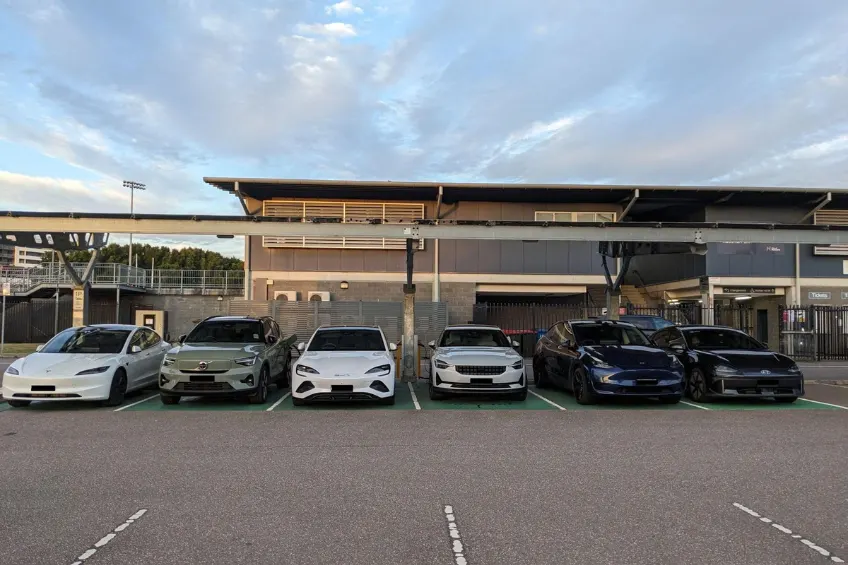
Most fleet electrification problems start in the car park, not with the vehicles, when a business orders ten EVs and finds the switchboard can only support a few chargers.
The right EV fleet charging solutions begin with a plan that matches how your vehicles are used, what your site can supply and how far your fleet will grow. This guide sets out an electric vehicle fleet transition in the order decisions should be made.
Why More NZ Businesses Are Transitioning to EV Fleets
Interest in fleet electrification NZ-wide is growing for practical reasons. New Zealand generates most of its electricity from renewable sources, so an EV charged here has much lower running emissions than a petrol or diesel vehicle. For organisations reporting emissions, charging data makes fleet savings easy to measure.
Depot vehicles can charge off-peak, and EVs need less servicing. When comparing whole-of-life costs, include road user charges: light EVs in New Zealand have paid RUCs since April 2024.
Key Considerations Before Electrifying a Fleet
Answer these questions before you choose a single charger:
- Which vehicles go first? Start with vehicles on predictable routes that return to base each day.
- Where do vehicles park overnight? At a depot, at staff homes, or both.
- How far do they travel, and how long are they parked? Check a typical day and your busiest day.
- Who owns the site? Leased premises need landlord approval before any electrical work.
- What is the timeline for the rest of the fleet?
Group vehicles by site and duty cycle, not lease end dates, so each installation serves a full group.
Understanding Your Fleet’s Charging Requirements
Charging needs come from the energy a vehicle uses each day, not the size of its battery.
Take a service van that travels 150 km a day at about 20 kWh per 100 km. It needs roughly 30 kWh each night, which a 7 kW AC charger replaces in under five hours. If the van sits at the depot for 12 hours, a DC fast charger adds cost without any operational benefit.
DC fast charging suits double shifts, short turnarounds and heavier vehicles. Also note that many EVs limit AC charging to 7 kW or 11 kW, so a 22 kW charger will not always charge faster.
If staff take vehicles home, business EV charging software can record what each home charger uses, so reimbursement is based on actual use.
Why EV Charging Infrastructure Planning Is Critical
Often the biggest cost is electrical work: cabling, trenching, switchboard changes and sometimes a supply upgrade from the lines company, which can take months to arrange.
Good EV charging infrastructure planning confirms:
- Spare capacity on site, based on real demand data rather than the main supply rating alone
- Charger locations and cable routes
- Whether an upgrade is needed
- Where future chargers will go
An EV charging feasibility study brings these checks together with a cost estimate before you commit.
The Role of Smart Charging and Load Management
Ten 7 kW chargers could draw 70 kW if every vehicle plugged in at once. Many commercial sites do not have that much spare capacity.
Load management shares the available power across chargers and adjusts to the building’s demand in real time. Charging can also be scheduled for cheaper off-peak periods. For many fleets, this is the difference between a costly supply upgrade and using the capacity already on site, which is why it is now standard in most commercial EV charging solutions.
Charge management software also reports energy use per vehicle and costs by site, and flags chargers that go offline.
How to Future-Proof Your Charging Infrastructure
Future-proofing mostly means doing the disruptive work once:
- Install conduits and cabling for future chargers while trenches are open.
- Choose OCPP-compliant chargers so your hardware is not locked to one software provider.
- Mark future charging bays in your parking layout.
- Budget for maintenance. A faulty depot charger can keep a vehicle off the road the next morning.
A staged rollout works well: install for the first vehicles, prepare the site for the next group, then use real charging data to size later stages.
Choosing the Right EV Charging Partner
When design, hardware, software and support sit with different suppliers, it is often unclear who is responsible when a charger goes offline.
Look for a partner that assesses your site and fleet data before quoting, designs for later stages and stays involved after commissioning.
EVSE has supported New Zealand organisations with EV charging since 2015, including Fonterra’s electric fleet transition. Its fleet EV charging service covers every stage: planning and site assessment, installation, commissioning, monitoring and ongoing support. That means one point of contact for your EV fleet charging.
Ready to plan your fleet transition? Talk to EVSE about a site assessment and find the EV fleet charging solutions that suit your vehicles, site and growth plans.
Frequently Asked Questions
How many EV chargers does a business fleet need?
It depends on daily distance, how long vehicles are parked and whether staff charge at home. Vehicles parked overnight can often share chargers through scheduling, while vehicles on tight shifts usually need a dedicated charger.
How much does fleet EV charging infrastructure cost in NZ?
The cost depends on the number and type of chargers, cable distances, switchboard capacity, any supply upgrade and your software and maintenance plan. It is also worth checking EECA for current co-funding rounds.
Can existing commercial buildings support EV charging?
Many can, particularly with load management. What matters is spare capacity when vehicles charge, usually overnight when building demand is low.
What is smart charging for EV fleets?
Smart charging uses software to control when and how fast each vehicle charges. It balances power across chargers, schedules charging for off-peak periods and records energy use for each vehicle.