Quick answer
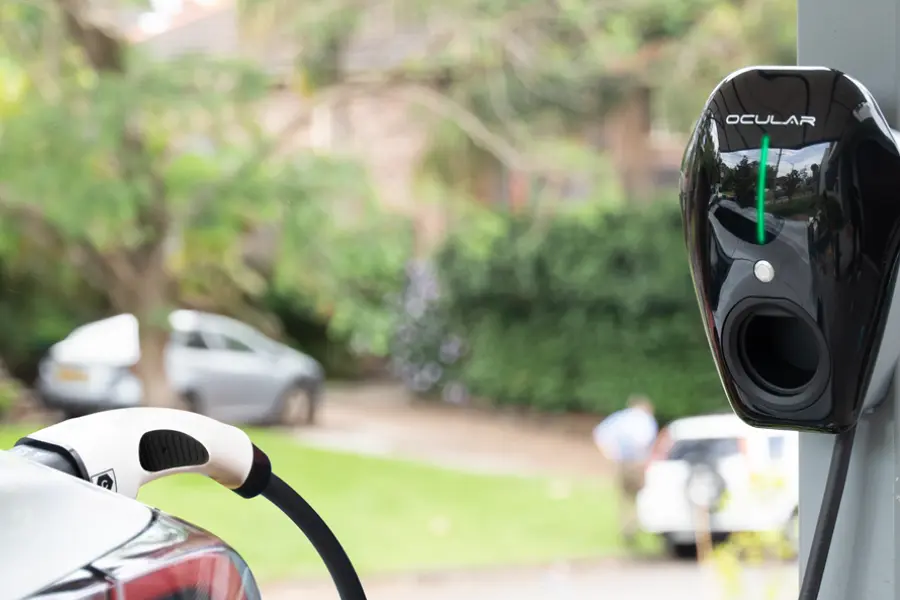
Most electric vehicles reach a full charge overnight at home. A 7kW wall charger adds 40 to 50 km of range per hour, so a standard eight hour overnight session adds around 320 to 400 km. A 10A portable charger adds 7.5 to 15 km per hour, which covers daily commuting but will not refill a large battery by morning.
What “overnight” means in practice
Most New Zealand drivers plug in somewhere between 9pm and 7am. That gives eight to ten hours of charging time.
That window matters more than the size of your battery, because very few drivers arrive home empty. The realistic question is not how long a full charge takes. It is whether your charger can replace the range you used that day before you leave in the morning. For most households, a 7kW charger does this with hours to spare.
Charging speed by charger type
| Charger type |
Power |
Range added per hour |
Range added in 8 hours |
Suits |
| Portable charger (10A or 15A socket) |
1.4 kW |
7.5 to 15 km |
60 to 120 km |
Short commutes, plug-in hybrids, backup use |
| Level 2 single phase |
3.3 to 7.4 kW |
18 to 40 km |
144 to 320 km |
Most New Zealand homes |
| Level 2 at 7 kW (32A single phase) |
7 kW |
40 to 50 km |
320 to 400 km |
Full battery electric vehicles |
| Level 2 three phase |
11 to 22 kW |
45 to 140 km |
Full charge well before morning |
Homes with existing three phase supply |
Speed depends on the vehicle as much as the charger. Every EV has an onboard charger that sets a ceiling on how much AC power it can accept. Most electric cars sold in New Zealand accept up to 11kW, so a 22kW charging station will not charge them any faster than 11kW. Check your vehicle specification before paying for capacity the car cannot use.
A worked example: the 70 kWh battery
Take a mid-size EV with a 70 kWh battery that arrives home at 20 percent charge. It needs roughly 56 kWh to reach full.
- On a 7kW charger: about eight hours. The car is full by morning.
- On a 1.4kW portable charger: about 40 hours. The car gains around 100 km overnight.
At an average New Zealand rate of 28 cents per kWh, a full 70 kWh charge costs about $19.60 and delivers over 400 km of range.
The problem most new EV owners hit
Many drivers start with the portable charger supplied with the car and assume it will be enough. It usually is, until one of the following happens:
- A long weekend trip means the car arrives home close to empty
- Winter driving increases consumption and reduces range
- A second electric vehicle joins the household
- The vehicle is delivered without a portable cable, which is now common
There is a safety dimension as well. A portable charger draws a sustained load through a general purpose socket for many hours at a time. A dedicated wall charger sits on its own circuit and is designed for that duty. EVSE chargers include internal DC leakage detection, which means a Type A RCBO can be used for protection rather than a more expensive Type B device.
How to make overnight charging cheaper
Two settings reduce the cost of every overnight session:
- Schedule charging for off peak hours. The Ocular LTE Plus allows charging sessions to be scheduled through its Bluetooth app, alongside session tracking, energy monitoring and exportable charging history.
- Charge from solar. The Ocular IQ Home Solar can be wired to both the grid and a solar system, so you can see how much of each session came from your panels and how much came from the grid.
Setting up for a full overnight charge
- Choose a 7kW single phase (32A) charger unless the property already has three phase power available
- Position the charging station within three metres of the vehicle charge port
- Place the outlet near the garage door so the cable reaches the car whether it is parked inside or outside
- Use a licensed electrician for the installation and get a written quote before any work begins
- Confirm the switchboard has spare capacity, as this is the most common cause of an unexpected quote variation
- Allow for cable weight when choosing length, at roughly 3 kg for a 5 metre cable and 6 kg for a 10 metre cable
Frequently asked questions
Can I fully charge any EV overnight at home?
On a 7kW charger, yes for almost every battery electric vehicle sold in New Zealand. Eight hours at 7kW delivers 320 to 400 km of range, which exceeds the usable capacity most drivers need to replace.
Is it bad for the battery to charge every night?
No. Level 2 AC charging is the gentlest form of charging. Many manufacturers recommend charging to 80 percent for daily use and 100 percent before long trips, because the final 20 percent charges more slowly while the battery cells balance.
Do I need three phase power at home?
Most homes do not. Three phase only helps if your vehicle can accept more than 7.4kW of AC power, and it requires an existing three phase supply. If three phase is already available at the property, it is worth running to the garage for future vehicles.
What does a full overnight charge cost?
About $19.60 for a 70 kWh battery at 28 cents per kWh, which delivers over 400 km. The exact figure depends on your electricity plan, your charging times and whether you use solar.
Which home charger does EVSE recommend?
The Ocular IQ Home Solar 7kW is the recommended single phase charger. It adds up to 50 km of range per hour of charge, has a small wall footprint and comes with a two year warranty.