Quick Answer
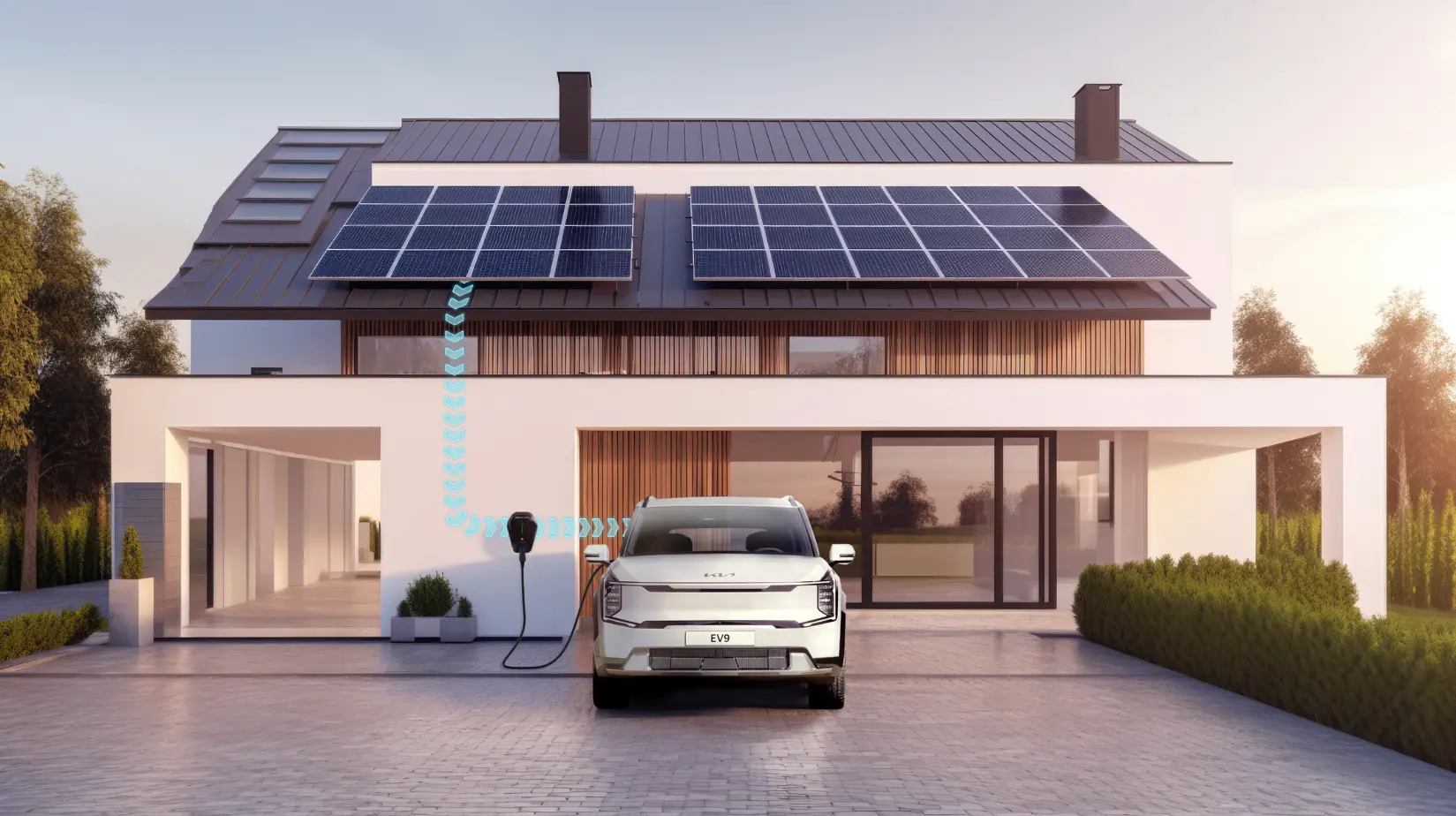
Yes. An electric vehicle can be charged directly from home solar panels, provided the charger is solar-compatible. The Ocular IQ Home Solar, available through evse.nz, is built for this and uses CT clamps to measure a home’s excess solar generation, then matches the car’s charging speed to the power actually available from the panels.
Standard EV chargers: cannot detect or respond to solar production, so they draw from the grid regardless of panel output
Solar-compatible chargers: such as the Ocular IQ Home Solar, read solar generation in real time and shift charging speed to match it
Three charging modes available: Fast, Solar Assist, and Solar Only, so the household can choose how much grid power is used
No extra hardware needed: the Ocular IQ Home Solar works with any solar panel or inverter brand already installed at the property
How Solar EV Charging Works
A solar-compatible charger does not simply share a circuit with the solar system. It actively measures how much power the panels are producing above what the rest of the house is using, then directs that excess toward the car.
The Ocular IQ Home Solar does this using CT clamps fitted to the home’s switchboard. These clamps read the incoming grid feed and the home’s own usage, calculate the excess solar available, and adjust the charger’s output accordingly, all without exporting unused solar back to the grid at a lower buy-back rate.
Charging Modes Explained
| Charging Mode |
How It Works |
Best For |
Trade-off |
| Fast |
Charges at maximum power from grid or solar |
Fastest possible charge when timing does not matter |
Draws from the grid if solar is not producing enough |
| Solar Assist |
Charges at a minimum baseline plus any excess solar produced |
Everyday use, especially cloudy or variable solar days |
Uses some grid power to maintain the baseline charge |
| Solar Only |
Charges only when excess solar production is available |
Maximising free solar charging with no grid cost |
Charging pauses when solar output drops, so full charge is not guaranteed |
Solar Assist is generally the most practical everyday setting, since it keeps a baseline charge going even when solar output drops.
Fast Mode
The vehicle charges at maximum power, drawn from solar, the grid, or a mix of both. Any current limit set during installation or by schedule still applies. This mode is best used when a full charge is needed quickly and solar availability is not the priority.
Solar Assist Mode
The EV charges at a minimum baseline rate, topped up with any excess solar available. If solar production is low, such as on a cloudy day, the shortfall is drawn from the grid so charging continues without interruption. This is the recommended mode for most households with solar, since it balances reliable charging with solar savings.
Solar Only Mode
The car charges only when excess solar production is available, with a minimum threshold required to protect the vehicle’s battery. If solar output drops below that threshold, charging pauses and resumes once production picks back up. This mode maximises free charging but does not guarantee a full charge by a set time.
Do You Need a Special Charger for Solar Charging?
Yes. A standard Level 2 charger without solar compatibility charges at a fixed rate and cannot respond to changes in solar output. To charge from solar, the charger itself needs the ability to measure and react to solar generation.
| Feature |
Ocular IQ Home Solar |
Ocular IQ Wallbox V2 |
| Charges from solar panels |
Yes, via built-in CT clamps |
No |
| Charging modes |
Fast, Solar Assist, Solar Only |
Standard smart charging only |
| Charging speed |
7kW or 22kW |
7kW or 22kW |
| Warranty |
3 years |
2 years |
| Best fit |
Homes with solar now or planned |
Homes without solar |
What a Home Needs for Solar EV Charging
- Solar panels already installed and connected to the home’s electrical system, or planned for future installation.
- A solar-compatible charger, such as the Ocular IQ Home Solar, fitted with CT clamps at the switchboard.
- Installation by a licensed electrician, since both the charger and CT clamps must be wired correctly to read solar and grid data accurately.
- A smartphone app, included free with the Ocular IQ Home Solar, to switch between Fast, Solar Assist, and Solar Only modes and monitor charging history.
Benefits of Solar EV Charging
- Reduces reliance on grid electricity for charging, particularly during daylight hours when solar production is highest.
- Avoids exporting excess solar back to the grid at a lower rate than it would otherwise be used for charging.
- Works with any existing solar panel or inverter brand, since the Ocular IQ Home Solar reads generation independently of the panel manufacturer.
- Gives the household control over how much grid power is used, through the three switchable charging modes.
What If I Already Have a Standard Charger?
A standard, non-solar charger cannot be upgraded to read solar production after installation, since the solar-matching capability depends on the charger’s internal hardware and CT clamps fitted at the time of installation. Households wanting solar charging with an existing non-solar charger, such as the Ocular IQ Wallbox V2, would need to replace the unit with a solar-compatible model such as the Ocular IQ Home Solar.
Getting Set Up
Households with solar, or planning to add it, can check charger options and get a recommendation suited to their property through evse.nz. Since installation must be carried out by a licensed electrician, it is worth confirming solar charging requirements before the unit is purchased, so the correct CT clamps and wiring are included from the start.
Frequently Asked Questions
Can any EV charger use solar power?
No. Only chargers built with solar-matching capability, such as the Ocular IQ Home Solar, can measure and respond to solar production. A standard charger draws from the grid at a fixed rate regardless of solar output.
Do I need to change my solar panels to charge my EV from solar?
No. The Ocular IQ Home Solar works with any existing solar panel or inverter brand, since it measures generation independently through CT clamps rather than communicating directly with the panels.
Which charging mode should I use for solar charging?
Solar Assist is the most practical mode for most households, since it maintains a baseline charge while using as much excess solar as is available. Solar Only is better suited to households prioritising free charging over guaranteed charging times.
Will solar charging fully charge my car overnight?
Solar charging only works while the sun is producing excess power, so it does not apply overnight unless paired with Fast or Solar Assist mode, which can draw from the grid to complete the charge.
Can I install a solar EV charger myself?
No. A licensed electrician must install the charger and fit the CT clamps to the switchboard to meet New Zealand electrical safety standards and ensure the solar reading is accurate.