Quick Answer
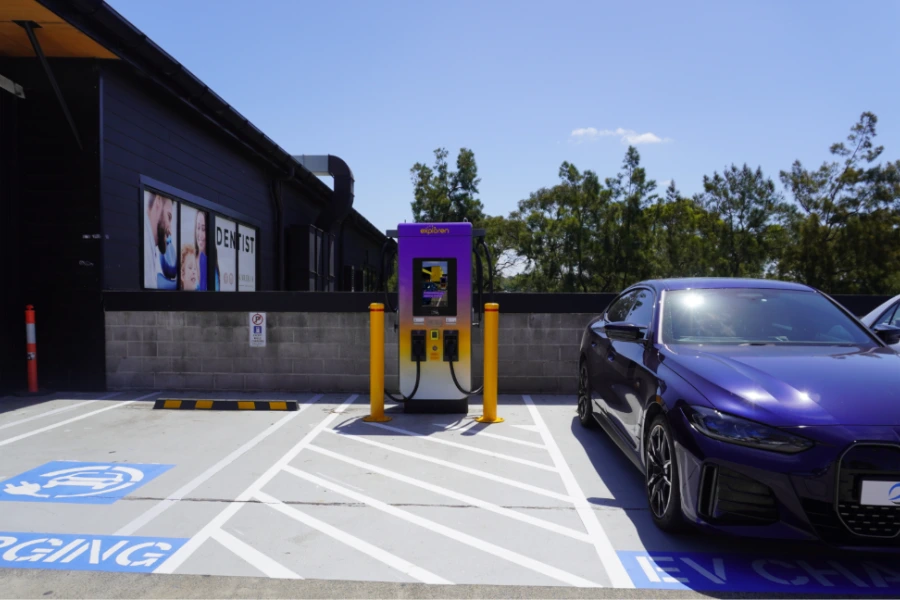
Businesses generate revenue from EV charging stations directly through charging fees, and indirectly through increased foot traffic, longer visit times, and repeat custom. Direct revenue is managed through a tariff the business sets using charge point software, while indirect revenue comes from EV drivers choosing a site because it offers charging. evse.nz supports both approaches through its OCPP charge point software and its hosted charging option for businesses that want charging without upfront hardware cost.
- Direct revenue: charging fees collected per kWh, per session, or by time connected, set through a customisable tariff
- Indirect revenue: increased foot traffic and dwell time, since EV drivers actively choose sites offering charging
- Hosted charging: a business hosts a charger that is funded, installed, and maintained by a provider, avoiding upfront investment
- Owned charging: a business owns the charger and controls pricing, access, and the resulting revenue directly
Revenue Models Compared
| Revenue Type |
How It Works |
Example Setting |
| Direct charging fees |
Drivers pay to charge, through a tariff the business sets |
Public car park, shopping centre, retail site |
| Indirect revenue |
Charging draws customers who spend more time and money on site |
Retail, hospitality, shopping centres |
| Hosted charging |
A business hosts a charger funded, installed, and maintained by a provider |
Sites wanting charging without upfront investment |
| Owned charging |
A business owns the charger outright and controls access, pricing, and revenue |
Sites wanting full control over the charging offer |
Direct Revenue Through Charging Fees
The most straightforward way a business earns from EV charging is by charging drivers to use the station. This is managed through charge point software, which allows a business to set a customisable tariff and collect payment automatically as sessions are completed.
| Pricing Model |
How Drivers Pay |
Best Suited To |
| Per kWh |
Charged for the exact energy used |
Businesses wanting pricing that reflects actual electricity cost |
| Per session |
A flat fee regardless of charging duration |
High-turnover sites wanting simple, predictable pricing |
| Time-based |
Charged for the duration connected to the charger |
Sites wanting to encourage drivers to move on once charged |
| Free, tariff set to zero |
No charge to the driver |
Workplaces or venues using charging as a customer or staff benefit |
The right pricing model depends on the site’s purpose. A workplace offering charging as a staff benefit may set the tariff to zero, while a public car park may charge per kWh to recover electricity cost and generate a margin.
Indirect Revenue Through Customer Behaviour
Public EV charging also creates revenue indirectly. Locations offering charging attract EV drivers who might otherwise go elsewhere, and drivers tend to stay longer while their vehicle charges, which increases the chance of additional spending on site.
- High-traffic and long-stay locations benefit most, including shopping centres, hotels, workplaces, and hospitality venues.
- Offering charging positions a business as forward-thinking, which can strengthen brand perception among environmentally conscious customers.
- Repeat visits increase where EV drivers come to rely on a specific location for charging as part of their regular routine.
The Role of Charge Point Software in Revenue
Software is what turns a charger into a manageable revenue source rather than a fixed cost. A cloud-connected platform gives a business visibility and control over its chargepoints from a single dashboard.
- Drivers can locate and start a charging session by scanning a code, without needing a dedicated account for every site.
- Businesses can set and adjust tariffs remotely, rather than pricing being fixed at installation.
- Chargepoints can be branded in-app, reinforcing the business’s own identity to EV drivers using the network.
- Workplaces can track employee charging usage, which is useful for Fringe Benefit Tax calculations.
Hosting a Charger vs Owning One
Businesses do not need to purchase hardware outright to generate revenue from EV charging. Through evse.nz, a business can become a site host with a fully funded public charging solution, where installation, operation, and maintenance are managed by the provider. This removes the upfront investment, though revenue potential is typically shared under a hosting arrangement.
A business that owns the charger outright takes on the upfront cost, but retains full control over access, pricing, and the revenue the charger generates. The right approach depends on whether the business prioritises avoiding upfront cost, or maximising long-term control over revenue.
Choosing the Right Location
Charger location has a direct effect on both direct and indirect revenue. Public EV charging works best in high-traffic and long-stay locations.
- Shopping centres and retail sites, where dwell time already supports additional spending
- Hotels and hospitality venues, where overnight or extended stays suit slower charging speeds
- Workplaces, where charging functions as an employee benefit rather than a public revenue source
- Highway stops and travel corridors, where drivers need a fast, reliable charge before continuing a journey
Getting Started
Businesses considering EV charging as a revenue source can request a commercial charging quote through evse.nz to compare hosted and owned options against their specific site and customer base before committing to an approach.
Frequently Asked Questions
Can businesses make money from EV charging stations?
Yes. Businesses generate direct revenue through charging fees, and indirect revenue through increased foot traffic and customer dwell time, particularly at retail and hospitality locations.
What pricing model should a business use for EV charging?
This depends on the site’s purpose. Per kWh pricing suits businesses wanting to recover electricity cost accurately, while per session or time-based pricing suits high-turnover sites wanting predictable, simple pricing.
Can a business offer EV charging without paying for the hardware upfront?
Yes. A business can host a charger that is funded, installed, and maintained by a provider such as evse.nz, avoiding the upfront cost of ownership.
Does EV charging really increase foot traffic and spending?
EV drivers actively choose locations that offer charging, and tend to stay longer while their vehicle charges, which supports additional on-site spending at retail and hospitality locations.
Is charge point software necessary to generate revenue from EV charging?
Software is necessary for most commercial revenue models, since it manages tariff setting, payment collection, and usage tracking across chargepoints. Without it, a business has no practical way to bill drivers or monitor usage.